
Cord end sleeves, cable lugs, connectors, splices and heat shrink tubes are essential accessories for almost any electrical installation. These components help ensure durable, reliable and safe wire connections in residential, office and industrial environments. By using the right accessories for each cable size and application, you can achieve clean terminations, reduce contact resistance and support long-term, trouble-free operation of the entire electrical system.

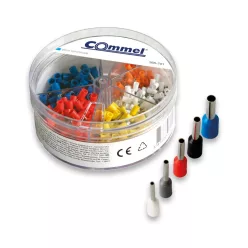
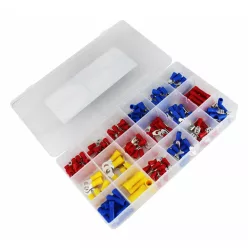
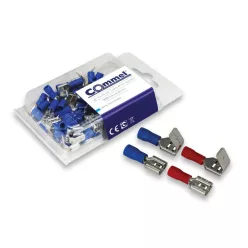
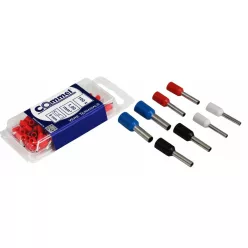
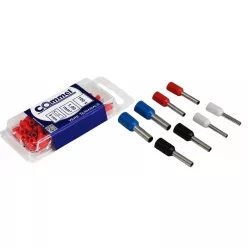
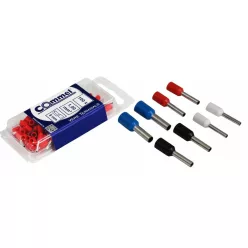
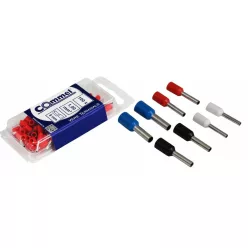
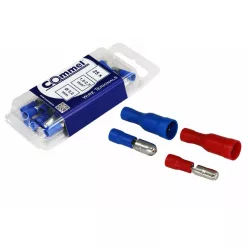
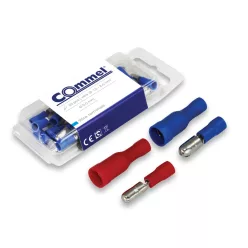
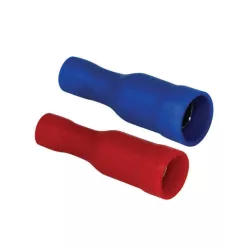
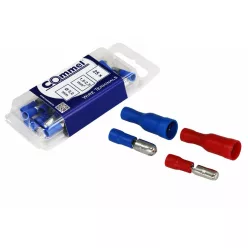
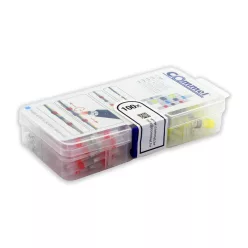
In this category you will find a wide range of electrical installation accessories designed for professional cable handling and reliable connections. Cord end sleeves and cable lugs are particularly important wherever stranded conductors are used. Cord end sleeves provide a firm, stable termination at the end of the conductor, prevent individual strands from splaying and help achieve a secure connection in screw or spring terminals. This improves contact quality and can support the long service life of the connection under everyday mechanical and thermal loads.
Cable lugs are used when larger cross-section cables must be connected safely and repeatably to terminals, busbars or equipment. Their design allows for a large contact surface, stable fastening and easy installation with the appropriate crimping tool. By matching the lug type and size to the conductor and mounting point, you can create robust connections that remain secure even in demanding environments.
Connectors and splices are used to join conductors in a wide variety of installation scenarios. They make it possible to extend cables or continue runs in a straight line where the original cable length is insufficient or the routing needs to be modified. Properly selected connectors can support stable, continuous operation of the electrical system, even in more complex distribution networks with multiple branches and junction points.
Within this category you may encounter different connector technologies, such as screw, spring or crimp types, as well as insulated and non-insulated versions. This allows you to choose a solution that matches the conductor type, cross-section, installation environment and assembly method. Transparent or colour-coded housings can also make inspection and identification easier during installation and later maintenance.
Heat shrink tubes provide additional mechanical and environmental protection for joints, soldered connections and vulnerable cable sections. Made from heat-shrinkable plastic, they contract around the conductor or joint when heated, forming a tight, protective layer. This can help shield the connection from dust, moisture and other external influences, while adding an extra level of insulation and strain relief.
Heat shrink tubing is available in various diameters, shrink ratios, wall thicknesses and colours, so you can adapt it to the specific cable size and application. Thicker-wall or adhesive-lined versions can offer enhanced protection in more demanding environments, while coloured tubing is often used for phase identification or functional marking within control cabinets and distribution boards.
The careful selection of cord end sleeves, cable lugs, connectors, splices and heat shrink tubes contributes significantly to precise and dependable electrical work. Clean, well-organised and mechanically supported connections can reduce the likelihood of faults, intermittent contacts or later rework. In addition, clearly arranged wiring and properly finished cable ends make troubleshooting and modifications easier throughout the life of the installation.
These accessories are relevant in almost every phase of an electrical project, from initial installation through expansion to routine maintenance. Using suitable components supports efficient workflow, helps maintain consistent connection quality and can contribute to the overall safety and reliability of the system in a wide range of applications.
When choosing products from this category, it is important to consider conductor cross-section, insulation type, mounting conditions and the tools available for assembly. Matching these parameters will help ensure that each connection is both mechanically stable and electrically appropriate for the intended load and environment. By combining correctly selected cord end sleeves, cable lugs, connectors, splices and heat shrink tubes, you can build structured, durable wiring systems that are easier to install, inspect and maintain over time.

