
Hanging extension cords are used wherever you need to place a device or appliance further away from the power outlet. They are especially practical in places where no socket is directly available, or when you need to operate equipment in another room. Thanks to their flexible cable design, they are easy to route around furniture and obstacles, so you can power lights, tools, or household appliances exactly where you need them without moving the original power source.

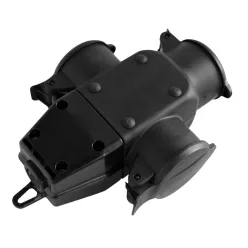
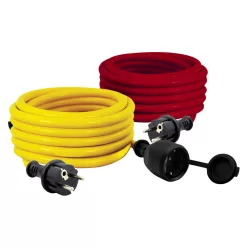
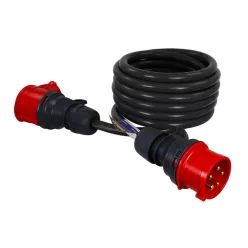
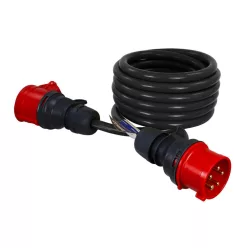
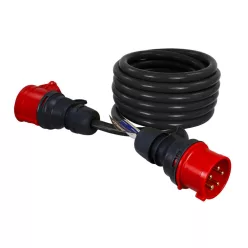
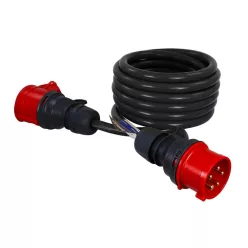
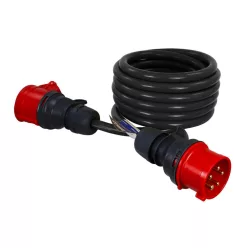
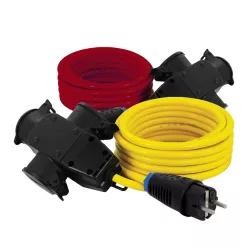
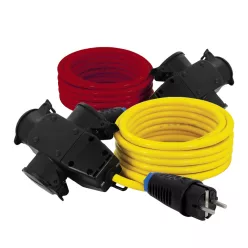
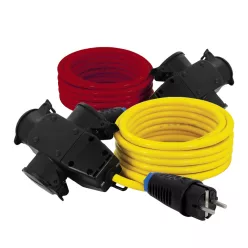
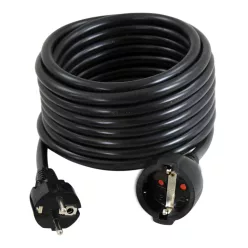
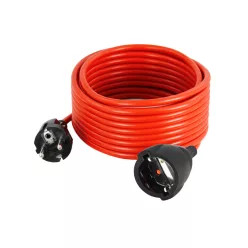
Hanging extension cords are versatile power accessories designed to safely extend the reach of your electrical devices. They combine flexibility, durability, and convenient length options, making them suitable for both everyday household use and more demanding professional environments.
Their flexible cable construction allows you to guide the cord around corners, furniture, or equipment without putting strain on the plug or socket. This flexibility not only increases convenience but also helps reduce the risk of damage caused by tight bends or pulling. In many setups, a hanging extension cord is the simplest way to bring power exactly where you need it, without rearranging your space.
These cords are available in a wide range of lengths, so you can choose the most suitable version for your specific task. Shorter models are ideal for desks, workbenches, or home electronics, while longer cables can bridge larger distances in garages, gardens, workshops, or temporary installations. This variety lets you avoid unnecessary cable clutter while still ensuring enough reach.
Safety is a key consideration in the design of hanging extension cords. The insulation is typically made from robust rubber or durable plastic that helps protect the conductor from mechanical damage and environmental influences. Many products are manufactured to meet common household and industrial standards, helping to reduce the risk of electric shock or leakage when used correctly and within their rated limits.
Different models offer different load capacities, expressed in amperes (A) and sometimes in watts (W). This rating indicates how much current the cord can safely handle. For lighter household appliances such as lamps, small heaters, or chargers, standard-rated cords are usually sufficient. For power tools, larger garden equipment, or professional machinery, higher-capacity cables are recommended. Matching the extension cord’s rating to the connected devices helps prevent overheating and supports reliable, long-term use.
Many hanging extension cords are equipped with one or more outlets. Single-outlet versions are ideal when you want a dedicated power line for one device, reducing the chance of overload. Multi-outlet versions allow you to connect several compatible devices at once, which is particularly useful behind entertainment centers, at workstations, or in temporary setups where multiple tools or lights must run from a single supply point. When using multiple devices, it is important to keep the total load within the cord’s specified rating.
In the home, hanging extension cords are a practical solution whenever a fixed socket is just out of reach. They can help you power floor lamps in the middle of the room, seasonal decorations, portable heaters, vacuum cleaners, or small kitchen appliances away from the wall. Because they are easy to coil and store, they are also convenient for occasional use, such as cleaning or rearranging furniture.
In workshops, garages, and light industrial environments, these cords support mobile work by allowing tools and equipment to be used at different points in the space. They can help power drills, saws, compressors, or testing equipment without relocating the main power source. Their flexibility makes them suitable for frequently changing layouts, temporary workstations, or maintenance tasks.
Outdoors, suitable models can assist with powering garden lighting, electric grills, lawn equipment, or devices used on terraces and patios. At events, they can help supply electricity to audio systems, decorative lighting, or catering equipment. When used outside, it is important to select cords that are appropriate for outdoor conditions and to protect connections from moisture according to the product’s instructions.
Hanging extension cords are also widely used in event and entertainment settings. They can help route power to stage lighting, sound systems, control desks, or temporary installations. Their ease of handling and flexible routing options make them a practical choice for setups that need to be assembled and dismantled quickly.
When choosing a hanging extension cord, it is useful to consider several factors: the required length, the number of outlets, the load capacity, and the intended environment (indoor or suitable outdoor use). Checking plug and socket types, as well as any additional features such as illuminated switches or protective covers, can help you find a cord that fits seamlessly into your electrical setup.
Proper use and storage can extend the life of your extension cord. Avoid running it through door gaps where it may be pinched, do not cover it with heavy objects, and uncoil long cords fully during use to support heat dissipation. After use, coil the cable loosely to prevent kinks and store it in a dry place.
Overall, hanging extension cords provide a simple and effective way to extend the reach of your power supply in homes, workshops, offices, and temporary installations. With the right length and rating, they offer a flexible, practical solution for powering a wide range of electrical devices while maintaining safe and convenient operation.

